Birth Chart Astrology
Enter your date, time and place of birth and see a snapshot of the sky at the moment you arrived, with every planet, house and aspect explained in plain words. The birth chart calculator is free, there is no sign-up, and no result is locked behind an email. Astrology is a symbolic tradition rather than a science, so treat what you read as a lens for reflection instead of a prediction.
Astrology is a symbolic tradition, not a science. Treat it as reflection rather than prediction.- Free forever
- No sign-up
- Chart in 10 seconds
- Planets, houses & aspects
Locate one exact moment
Add date, time and place. With no time, the calculator can still show placements without pretending to know houses.
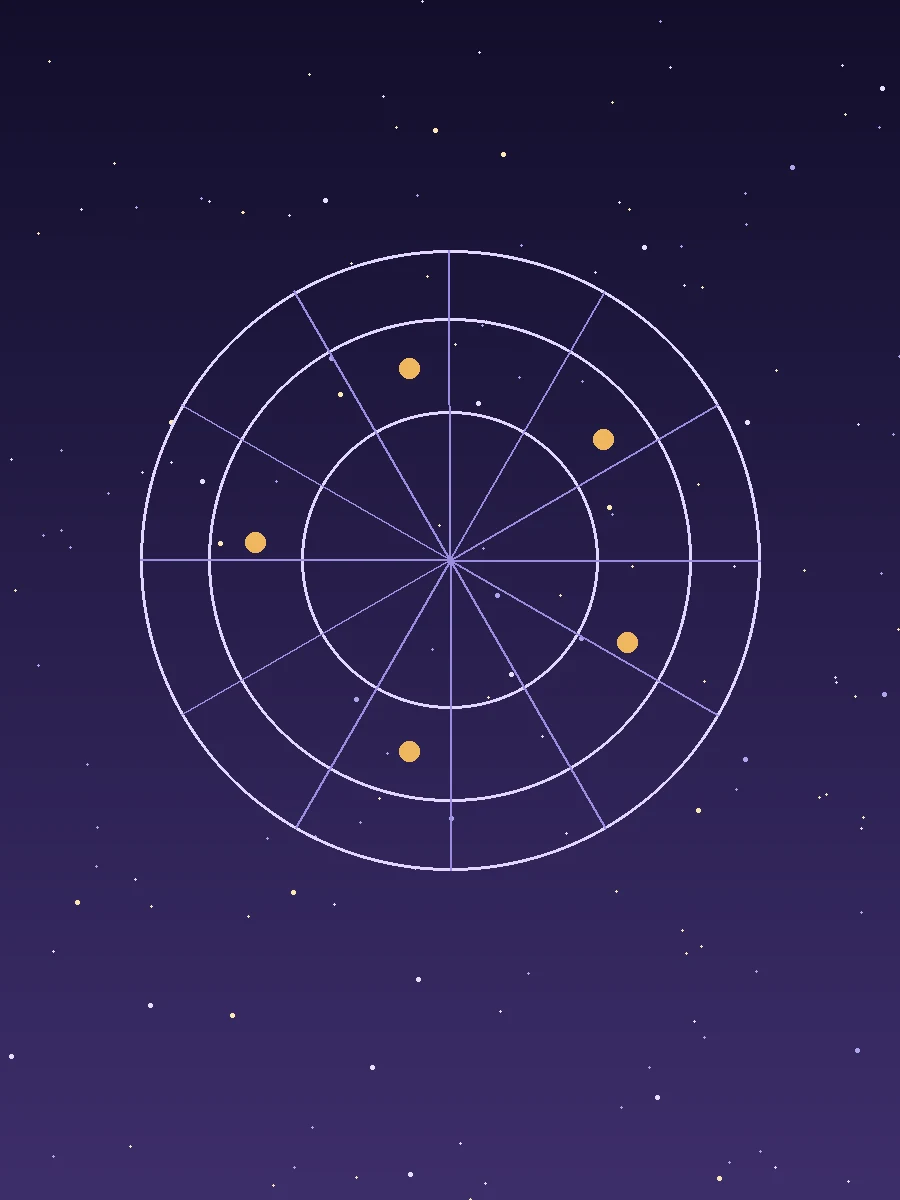
What birth chart astrology actually is
Birth chart astrology looks for meaning in where the sun, moon and planets sat at the precise minute of a person's birth, viewed from the precise place it happened. Most people arrive through sun-sign horoscopes, which cover roughly one twelfth of a single layer. A full astrological birth chart follows ten bodies through twelve signs and twelve houses, plus the angles between them, which is why two people born the same day can share a sun sign and almost nothing else.
The lineage runs from Babylonian sky-watchers who kept the first systematic records, through Hellenistic Greek scholars who added the houses and the aspects, to a framework that has been reworked continuously since. What it is not is a physical mechanism with evidence behind it: astrology has been tested and does not predict outcomes. That leaves it a symbolic language, closer to tarot than to meteorology, useful as a structured prompt for thinking about yourself. This calculator stands on that honest footing — the maths is exact, and the reading is offered as reflection.
The details the birth chart calculator needs
The birth chart calculator astrology form asks for three things, and the second one matters more than most people expect. The date of birth fixes the planetary positions and the sun sign, and is the easy part. The time of birth fixes the ascendant and the house cusps, and these shift by roughly one degree every four minutes, so a guess of 'somewhere in the morning' produces a chart that is right about the planets and wrong about the houses — which is half the reading. Birth certificates usually record it and hospital records often do. The place of birth sets the geographic frame the sky is drawn from, and city-level accuracy is enough.
If no time is available, the birth calculator still runs: it returns the chart with the houses left out rather than invented. Any birthchart calculator that hands you confident house placements without a birth time is guessing on your behalf, and this one would rather show you less and be honest about why.
Free birth chart, no sign-up: what you get
There is no account here, no email capture and no interstitial standing between you and the result. Enter three details, read the chart, come back whenever you like. This birth chart generator makes the birth chart free in the literal sense: all ten planetary positions with sign and degree, every one of the twelve house cusps, the ascendant, midheaven and the four angles, each major aspect between planets, and a written explanation of every placement.
Free astrology birth chart tools that want your address before showing your own chart have a simple problem: the chart is not the product, you are. Everything on the list above is part of the free birth chart, with nothing held back for a paid tier, because free birth chart astrology should cost nothing to look at.
A reading order: where to start
The wheel looks dense at first and clears quickly once you know the sequence. Begin with three placements — sun for core identity, moon for emotional wiring, ascendant for how you come across — because that trio explains most of what people recognise in themselves. Move on to the personal planets: Mercury for how you think and speak, Venus for what you value and how you relate, Mars for how you pursue and how you fight.
The outer planets come next. Jupiter, Saturn, Uranus, Neptune and Pluto move slowly enough to describe your generation more than you, except where one sits close to a personal planet. Aspects come last, since they show how all the parts interact. Every element is labelled in plain language on the wheel itself, so a birth chart reading leaves nothing you have to look up elsewhere.
Planets, signs and houses: the three-part sentence
Every placement in a chart is a sentence with three parts, and separating them makes the whole system legible. The planet is the what: Venus is the relating function, Mars the drive, Mercury the thinking. The sign is the how: Venus in Scorpio relates intensely and privately, while Venus in Gemini relates through talk and variety — same function, different style. The house is the where: Venus in the tenth house points the function at career and public life, and in the fourth it points at home and family.
Read as what, how and where, an astro birth chart stops being a list of symbols and becomes a set of statements you can check against yourself, and it is the only idea you need — it takes about five minutes to absorb. The twelve houses run through identity, resources, communication, home, creativity, work, partnership, transformation, belief, career, community and the unconscious, one map of an entire life, which is a fair part of why the framework has lasted two thousand years.
Aspects: the tensions a chart maps
Aspects are the angles between planets, and they describe whether two functions cooperate or obstruct each other. A conjunction puts two planets together so the functions fuse, for better and worse. An opposition sets them facing each other in a tug-of-war between two equally legitimate needs. A square, at ninety degrees, creates friction that demands action. Trines and sextiles bring ease and talent that flows without effort — and, for exactly that reason, tends to get neglected.
A chart crowded with squares is not a worse chart; it is usually the more interesting one, because internal friction is what pushes people to do something with their lives while trines get taken for granted. A free natal birth chart that describes only the easy aspects is selling comfort rather than insight.
Astrology by date of birth versus the full natal chart
Two different things get called by the same name, and the difference is worth knowing before you start searching. Astrology by date of birth alone yields the planetary positions and the sun sign, which is real information and covers most of a chart's content; what it cannot yield is the ascendant, the midheaven or the houses, because those depend on the hour and the place. The full birth natal chart adds all of that, and with it the entire where layer: the area of life each placement points at.
If you have no birth time, begin with the date version rather than skipping the whole exercise — the sun, moon and personal planets still read accurately, and that is enough to get real value. Adding the time later upgrades the same chart instead of replacing it.
Birthday chart, birthchart, natal chart: untangling the names
Birth chart, natal birth chart, astrological birth chart, astro charts birth chart — these all name the same document: the sky at the moment you were born. Birth charts written as a single word, birthchart, mean exactly the same thing. Birthday chart is the ambiguous one, sometimes pointing to the natal chart and sometimes to a classroom wall list of everyone's birthdays; if you came looking for your own placements, the natal chart is what you wanted.
A solar return is something else entirely — the chart of the moment the sun returns to its natal position each year — and a horoscope is, technically, the chart itself, though everyday use has collapsed the word into the sun-sign paragraph of a magazine. Whichever term you arrive with, the calculation is identical and so is the birth chart astrology underneath it.
My birth chart is ready — what comes next
The chart is a starting point, not an answer. Test it against what you already know: read the sun, moon and ascendant descriptions and check them against your own sense of yourself, keeping what fits and discarding what does not — if a line only works when you squint, it is telling you about you, not the stars. Then use the friction points as prompts: squares and oppositions mark internal tension, and 'these two parts of me pull against each other' is a genuinely useful question to sit with whether or not Saturn has anything to do with it.
Comparing charts with someone is where many people find the practice most engaging, since synastry — two charts side by side — externalises a conversation about how two people actually differ. Transits, meaning where the planets sit today relative to your natal positions, are the other common next step, and they build on the chart you already calculated.
The limits of birth chart astrology
Worth stating plainly, because almost nobody does. Do not use a chart for decisions you would otherwise make with evidence — job offers, medical choices, contracts, whether to leave someone — because those are not chart questions. And do not confuse description with destiny: a placement describes a tendency, never an outcome.
Be sceptical of anyone charging to 'correct' your chart, since the calculation is public mathematics and nobody holds a better version of your sky. What does work is treating the whole thing as a structured mirror, a use that does not depend on astrology predicting anything and that helps explain why the practice has outlived every attempt to bury it.
Questions about a birth chart
Is the birth chart calculator really free?
Yes, completely — no account, no email, no paid tier. Birth chart astrology free means free here.
What do I need to calculate a chart?
Three things: date, time and place of birth. The time carries the most weight, because it sets the houses.
What if I don't know my birth time?
The chart is still produced, with the houses omitted rather than guessed. Any house placements offered without a birth time would be invention, not calculation.
Does the free birth chart include aspects?
Yes — every major aspect is shown, with a short explanation of what each one means.
Is a birthday chart the same as a birth chart?
Usually people mean the same document, whether they call it a birthday chart or an astrology birth chart, though the phrase is also used for a plain list of birthdays.
Do different calculators give different results?
No. Planetary positions are public mathematics rather than proprietary data, so every accurate calculator returns the same placements. What differs is the interpretation text, the layout and whether anything is locked behind an account.
Can I calculate someone else's chart?
Yes, if you have their birth details — and ideally their agreement as well.
Does astrology actually predict anything?
No. It has been tested and does not. It works as a symbolic language for thinking about personality and difference, and that is how it is presented here.
Do you store my data?
The chart is calculated and displayed for you; there is no registration form to fill in.
Keep it in perspective
This site is offered for entertainment and reflection. Astrology is a symbolic tradition without scientific support, and nothing here should stand in for professional advice on health, finances, legal matters or relationships.